High-functioning anxiety: symptoms & how to alleviate it
If you have high-functioning anxiety, you may look like you have it all together, but inside, you’re battling racing thoughts, overthinking and self-criticism.
As a licensed therapist who works with Latinas in New York, I help my clients heal their anxiety so that they can truly enjoy their lives.
This article will explain the difference between high-functioning anxiety and generalized anxiety disorder and provide information about healthy coping skills.
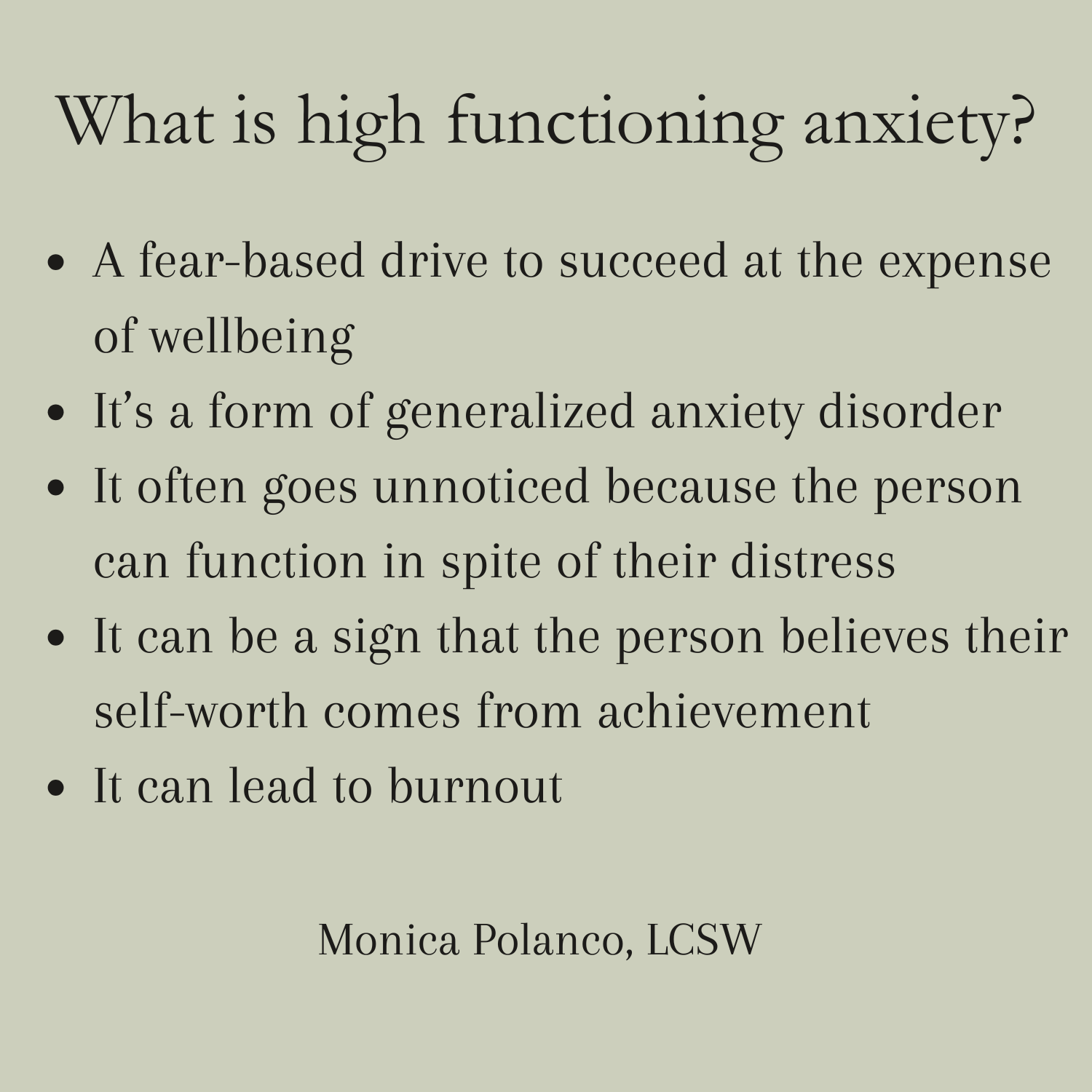
High-functioning anxiety is often driven by the fear of failure, not enjoyment.
What is high-functioning anxiety?
High-functioning anxiety is not a mental health diagnosis — it’s a term that has grown through public awareness on social media. High-functioning anxiety is a form of generalized anxiety disorder that often goes unnoticed because the person can continue to function.
Generalized anxiety disorder is a mental health diagnosis. People who have generalized anxiety disorder experience such symptoms as persistent worry, the inability to relax and trouble sleeping. These symptoms impair their ability to function — a key difference from high-functioning anxiety— and can last for months or years.
Women are at greater risk for generalized anxiety disorder than men. This may be because of differing social expectations, gender roles and relationship matters.
People who have high-functioning anxiety are often successful, but secretly struggle with stress, self-doubt and the fear of being inadequate. They tend to merge their sense of worth with their ability to succeed, which pushes them to excel. This drive comes from fear, not from a sense of enjoyment, and can lead to burnout.
People with high-functioning anxiety may struggle privately with the following:
Fear of criticism or significant self-criticism
Fear of falling short
Feeling on edge
People pleasing
People with high-functioning anxiety may experience these physical symptoms:
Excessive sweating
Headaches or migraines
Intestinal problems like diarrhea or ulcers
Muscle tension
Disturbed sleep
High-functioning anxiety can be caused by:
Significant stress
Growing up in a family where there was a lack of security
Having caregivers who had anxiety or high expectations
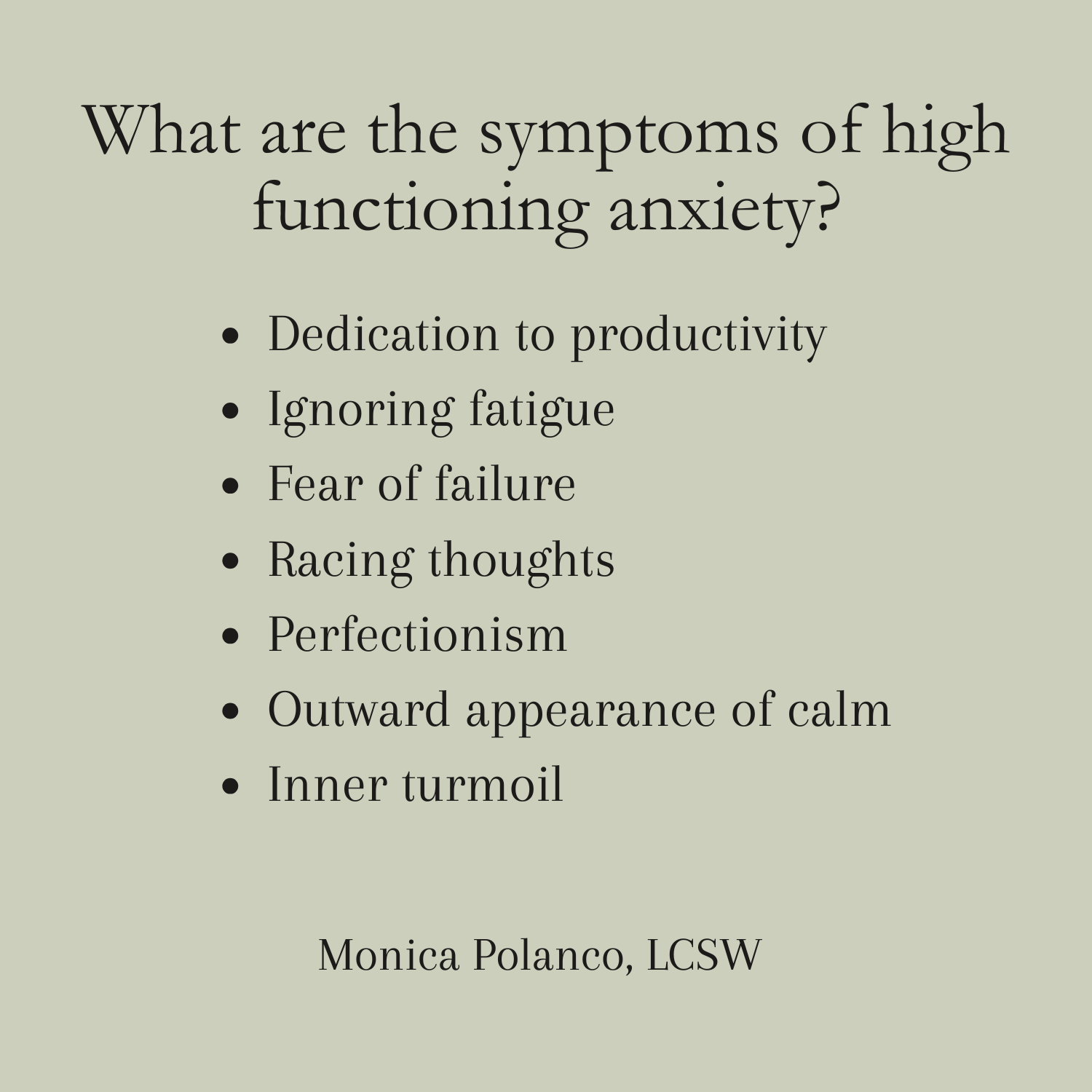
People who have high-functioning anxiety often look calm, but have tremendous internal stress.
Many of my clients are first generation immigrants who navigate unspoken expectations and competing cultural values. While one culture values self sacrifice and group harmony, the other rewards independence and assertiveness.
Often, children of immigrants feel pressure to succeed, especially if their parents made significant sacrifices to give them a better life. There may also be an unspoken expectation that they provide for their parents or that they compensate for their parents’ lower access to privilege.
All of these factors can contribute to high-functioning anxiety.
In therapy, we explore the messages my clients received while growing up. What did their caregivers believe about success, individuality and self care? What did their families believe about filial piety and duty to the family? How are childhood dynamics showing up at work and in their relationships as adults?
We also explore their sense of self worth and develop a sense of self-trust that’s not rooted in achievement. This helps them live from a place of fulfillment, rather than fear-based accomplishment.
Strategies for relieving high functioning anxiety
In therapy, we take a holistic approach that includes learning about the roots of high-functioning anxiety, changing their beliefs about self-worth and finding a balance between striving and savoring life.
The following strategies may help reduce high-functioning anxiety:
Avoid comparing yourself to other people — comparison is the thief of joy.
Seek support from people who care about you. Asking for help is a sign of strength.
Live according to your core values, not someone else’s. Knowing what your values are will help you start prioritizing your needs and setting healthy limits.
Write your worries down at night and place them in a “worry box.” This takes the thoughts out of your mind and creates a physical boundary that may help you sleep.
Schedule 15-20 minutes to worry and identify solutions to your concerns every day. With practice, this can re-train your brain and reduce your worrying habit.
Avoid using alcohol or drugs to cope.
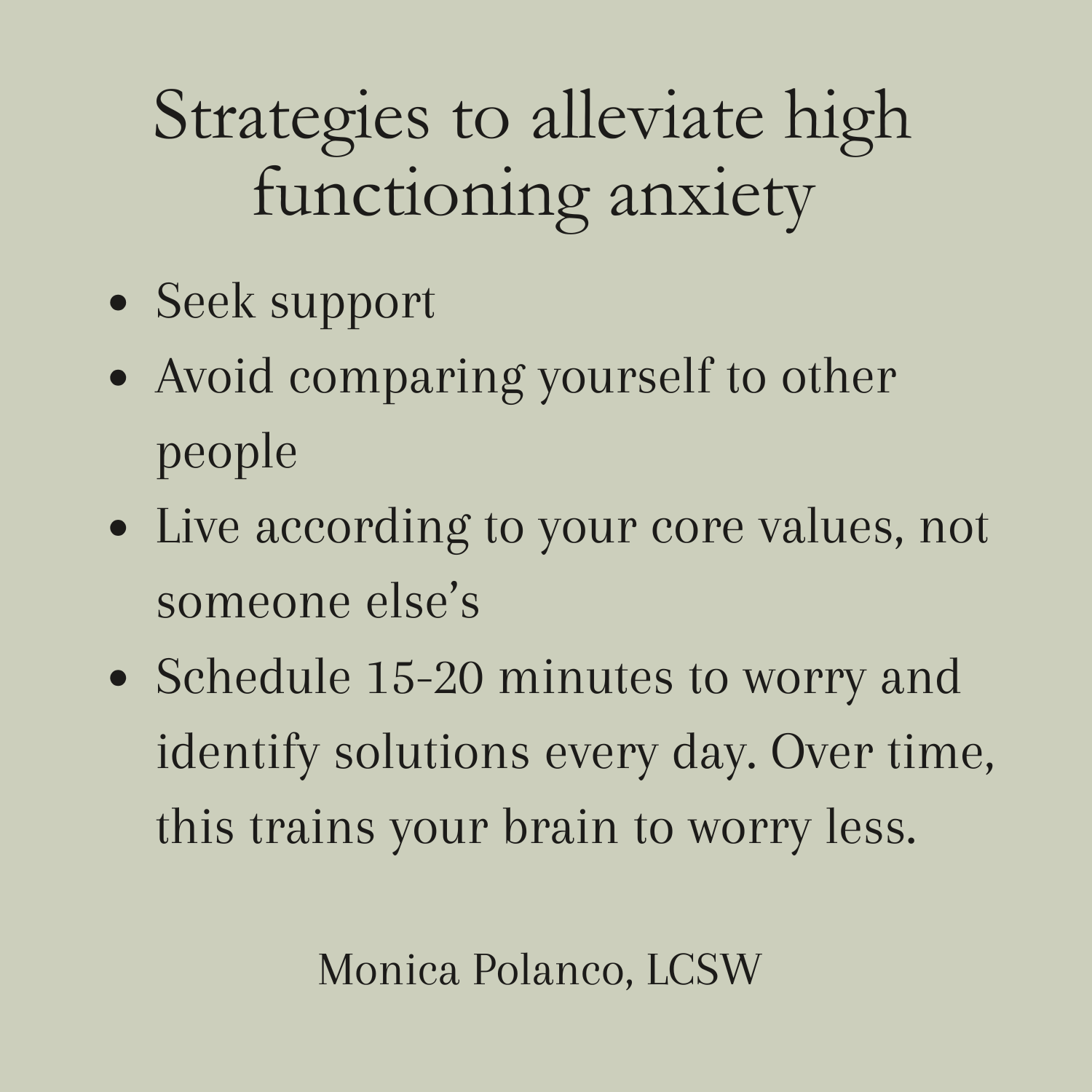
To alleviate high-functioning anxiety, limit time spent worrying and seek support.
High-functioning anxiety: Conclusion
High-functioning anxiety can motivate people to succeed, but it can come at a cost. It can cause emotional symptoms, such as fear of falling short, feeling on edge and self-criticism. It can also cause physical symptoms, such as excessive sweating and problems with digestion and sleep.
High-functioning anxiety is typically driven by fear, not fulfillment. Anxiety therapy allows people who have high-functioning anxiety to develop more self-compassion and strike a balance between striving and resting.
If you’re ready for support for high-functioning anxiety or generalized anxiety disorder, I can help. As a licensed clinical social worker and therapist in New York, I understand the unique challenges first-generation Latinas navigate. I also support women who are seeking a Spanish-speaking therapist in New York.
I invite you to book a free consultation here. I’d love to see if we’re a good fit.
Pa’lante!
Sources
Chang, J. (2023, January 27). What Is High-Functioning Anxiety? How to Tell If You Should Worry About Your Everyday Worries. New York-Presbyterian.
Cleveland Clinic. (2022, May 16). Signs You Have High-Functioning Anxiety. Cleveland Clinic.
Mayo Clinic. (2023, July 11). Behind the mask: Managing high-functioning anxiety. Mayo Clinic.
UCLA Clinic. (2026, February 12). What does high-functioning anxiety look like? UCLA Clinic.