Parentification trauma: definition, symptoms and how to heal.
Are you curious about the difference between healthy responsibilities in childhood and parentification trauma?
This article will define parentification trauma, describe its symptoms, provide prevention strategies and offer suggestions for healing.
As a licensed therapist who works with first-generation Latinas in New York, I help my clients understand how family expectations and parentification may influence their mental health, including anxiety, burnout and guilt around setting boundaries.
What is parentification trauma?
Parentification trauma develops when there is a chronic role reversal between parent and child. A parentified child is expected to carry duties that are not developmentally appropriate, such as managing a household and emotionally supporting their parents.
The child silences their needs in order to help the adults. Parentified children miss out on important milestones and growth opportunities because they’re so focused on helping their parents.
Having some responsibility in childhood — such as cleaning up after dinner or tidying up a space — is healthy when it’s age-appropriate. The problem arises when the child is expected to fulfill duties that exceed their developmental abilities, such as managing conflict between adults.
Parentified children serve their parents’ needs at their own expense. They live in homes in which adults are unavailable, absent or impaired.
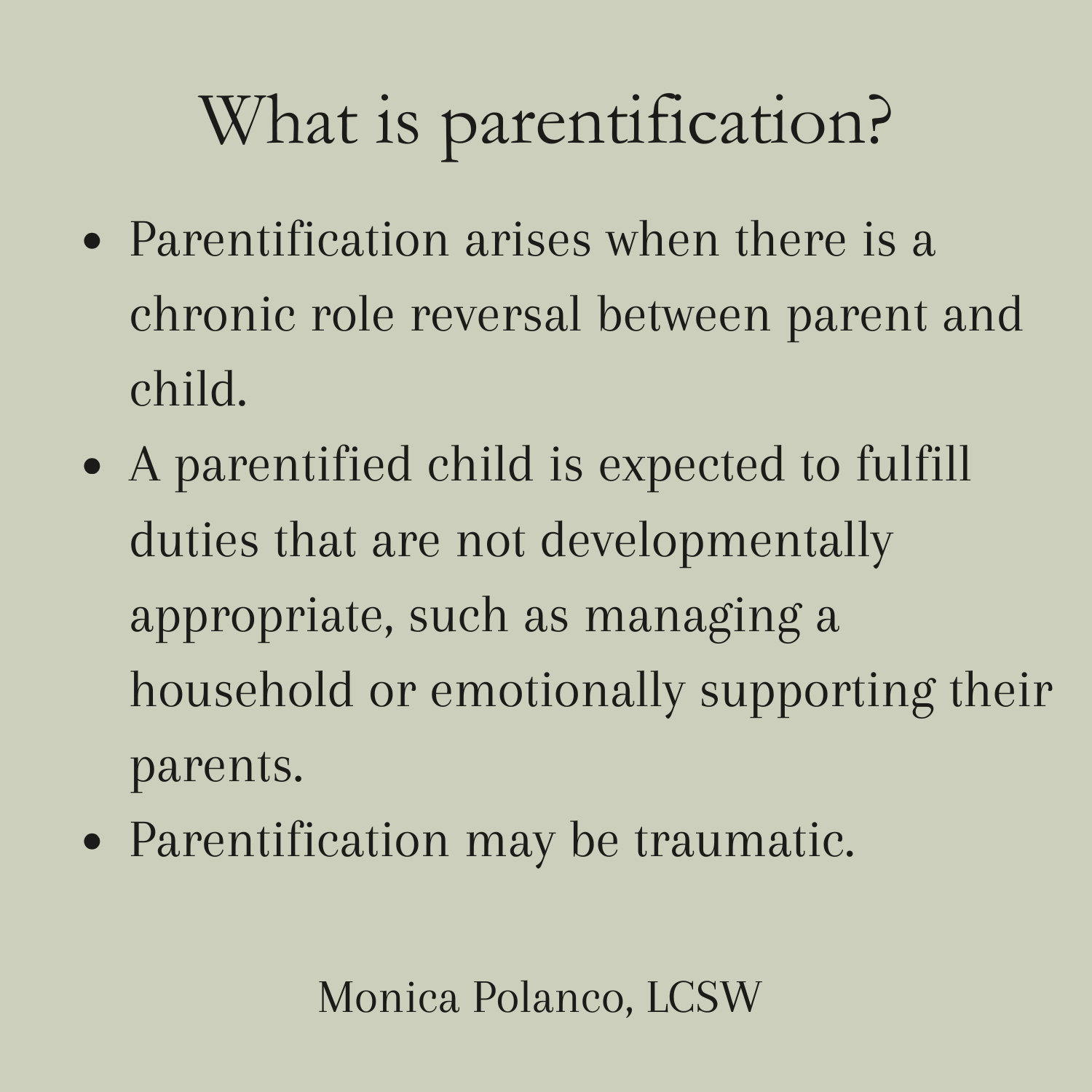
Parentification involves a chronic role reversal between parent and child.
What causes parentification?
Parentification can develop for many reasons.
Parents who depend on their children for support may be experiencing a major stressor, such as divorce, mental illness, medical illness or financial problems.
They may lack the skills to support their child’s physical, mental or emotional needs.
They may have experienced childhood neglect or have been raised as a parentified child.
Types of parentification: instrumental and emotional.
There are two types of parentification: instrumental and emotional.
Instrumental parentification refers to the physical aspects of parenting. Children who experience instrumental parentification are expected to cook, clean take care of siblings or manage household finances.
Emotional parentification develops when parents rely on children for emotional support. This can include asking children to keep secrets and provide advice or reassurance. The child then becomes a confidante.

There are two types of parentification: instrumental and emotional.
Healthy childhood responsibilities vs parentification
In healthy childhood, children manage age-appropriate chores while still having their needs met. For example, they may wash the dishes and complete their homework afterward. They may notice that their parent is having a hard day and offer a quick hug or kind word, then return to their activity.
A parentified child might make dinner, wash the dishes and help their siblings finish their homework. At the end of a long and tiring evening, they might fall asleep without completing their homework or studying for a test.
They may provide ongoing emotional support to their parent at the expense of their own feelings. They may become a child who has almost no needs and is constantly scanning for problems, which is known as hypervigilance.
Parentification trauma symptoms
Parentification can help children develop more empathy, responsibility and maturity, but it also takes a toll.
Parentified children grow up too quickly and miss important developmental milestones, such as developing an autonomous sense of self and taking initiative.
They often sacrifice their needs to help their parents. This can lead to anxiety, an inadequate sense of control and higher likelihood of risky behaviors.
Parentified children may experience headaches, stomachaches, aggression, trouble sleeping or appetite loss.
Because parentified children lack adult guidance, they may feel insecure and uncertain. They may fear making the wrong decision.
When parentified children become adults, they may have difficulty forming healthy, reciprocal relationships. They may struggle to identify and express their feelings, engage in self-blame, experience excessive guilt, depression or anxiety. They may have difficulty trusting people or continue the parentification cycle with their own children.
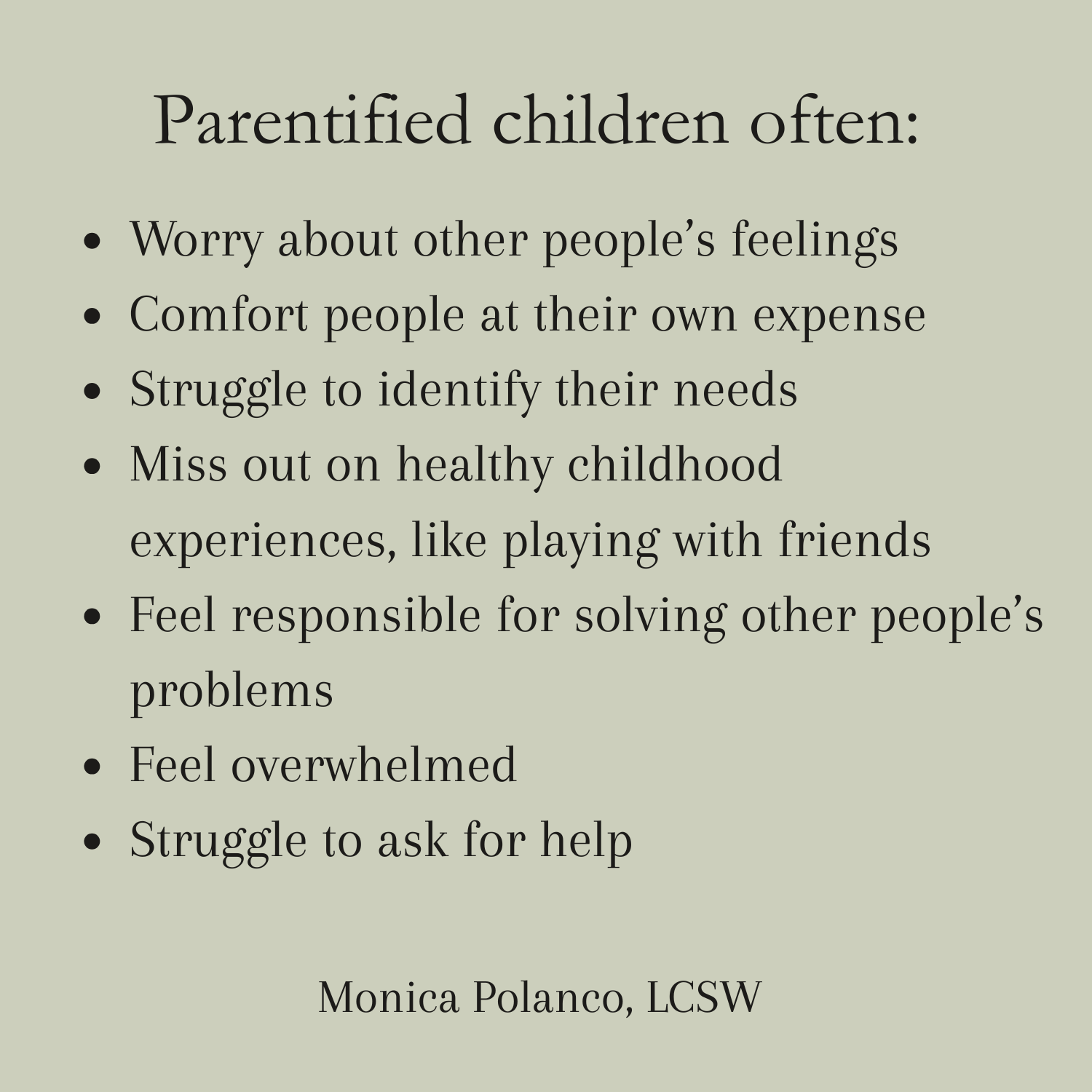
You may have parentification if you constantly worry about people’s feelings.
Tips to avoid parentification
The key feature in parentification is chronic role reversal between parent and child.
To avoid parentification, be mindful that you:
Address your child’s physical and emotional needs. That includes providing meals, clothing, love and support.
Express your emotions in an age-appropriate way. It’s okay for kids to see that parents feel sad. It’s okay for them to provide some comfort, but the parent should provide most of the emotional support.
Be forthcoming about life’s challenges without depending on your child to solve your problems. Allow them to feel supported by your leadership.
Parentification trauma healing
Parentification places an unfair burden on children, but it’s possible to heal.
First, it’s important to acknowledge what happened.
Parentified children need to be supported without having to earn that support. They need to learn to make decisions in the absence of a crisis and to tolerate imperfection. They need to separate their value from their ability to perform or help others.
If you become triggered by responsibilities that you were expected to fulfill as a child, therapy can help. A therapist can help you express difficult feelings, process the past and take better care of yourself.
As you heal, consider the following:
Set healthy boundaries
Healthy relationships are reciprocal, with each side supporting the other. If you’re always giving to others, consider setting limits to protect your energy.
Take good care of yourself
Try activities that bring you joy or help you reconnect with your inner child.
Find healthy ways to cope
If you’re being triggered by your past, create strategies to soothe yourself.
Be kind to yourself
Self-compassion, not self-blame, will help you heal.
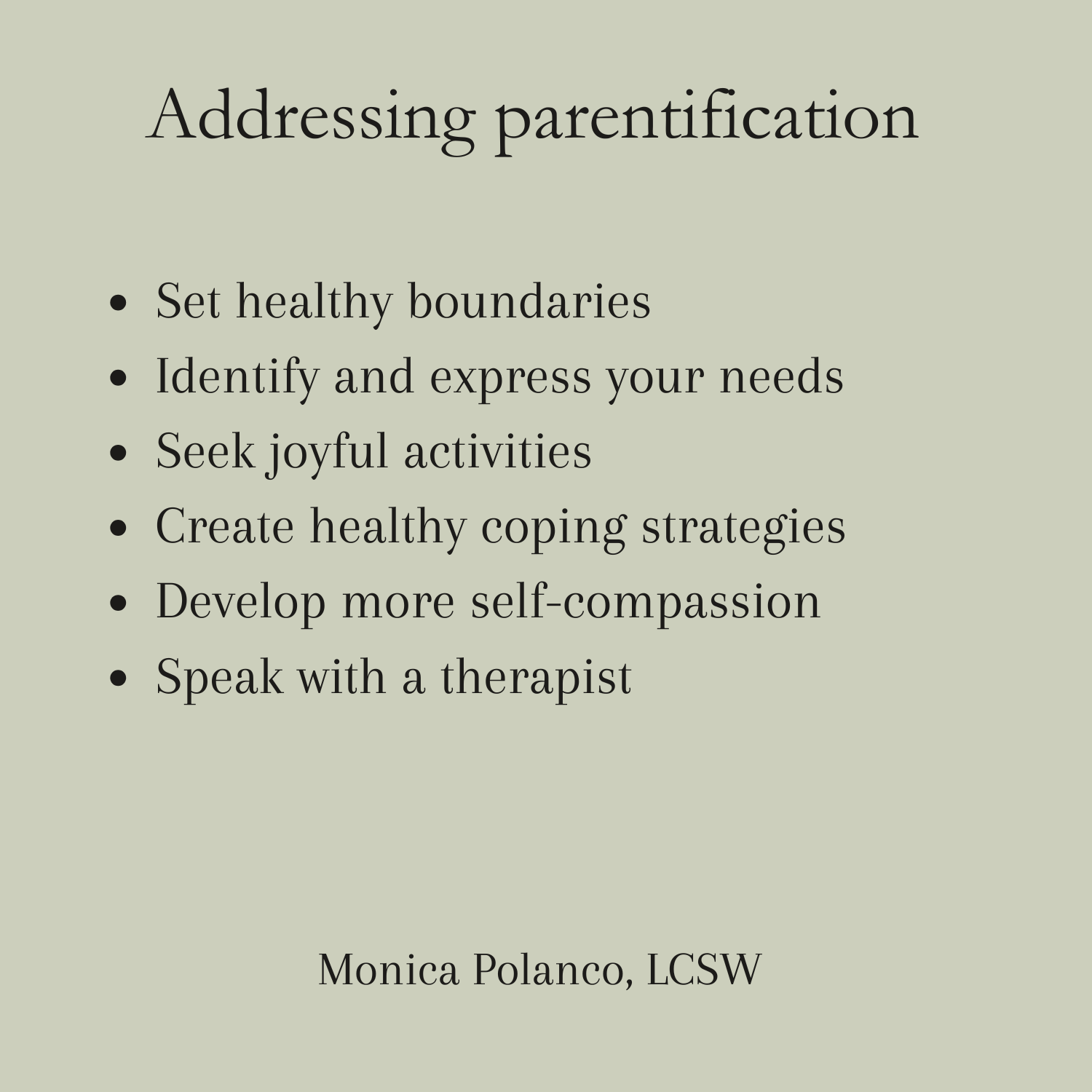
Identifying and expressing your needs can help you heal from parentification.
Parentification trauma: Conclusion
Children who are expected to fulfill adult responsibilities may experience parentification trauma.
They may struggle to set boundaries or accept help. They may experience dysfunctional relationships, anxiety, depression or other mental health difficulties.
It’s possible to heal from parentification trauma through awareness, support and self-compassion. Restoring the balance between giving and receiving assistance and developing an internal sense of safety is a good start. Therapy can help.
If you’re looking for a licensed therapist in New York who understands the unique challenges of being a first-generation Latina, I can help. I also support women who are seeking a Spanish-speaking therapist in New York.
To learn more about factors that can contribute to parentification, visit my page on therapy for guilt and boundaries and cultural identity therapy.
I invite you to book a free consultation here. I’d love to see if we’re a good fit.
Sources:
Cleveland Clinic. (2024, October 14). What is parentification? Living Healthy. Children’s Health. clevelandclinic.org.
Higgins, L. (2026, March 22). What is parentification? 10 signs to watch for in kids. Parents.
Campbell, J. (2023). Parentification. EBSCO.
Ma, Lybi. (2026, June 22). Parentification. Psychology Today.
Martin, M. (2026, April 23). What the parentified child looks like as an adult. CPTSD Foundation.